人生不相見, It is almost as hard for friends to meet
動如參與商。 As for the morning and evening stars.
今夕復何夕, Tonight then is a rare event,
共此燈燭光。 Joining, in the candlelight,
少壯能幾時, Two men who were young not long ago
鬢髮各已蒼。 But now are turning grey at the temples.
訪舊半為鬼, To find that half our friends are dead
驚呼熱中腸。 Shocks us, burns our hearts with grief.
焉知二十載, We little guessed it would be twenty years
重上君子堂。 Before I could visit you again.
昔別君未婚, When I went away, you were still unmarried;
兒女忽成行。 But now these boys and girls in a row
怡然敬父執, Are very kind to their father's old friend.
問我來何方。 They ask me where I have been on my journey;
問答乃未已, And then, when we have talked awhile,
兒女羅酒漿。 They bring and show me wines and dishes,
夜雨翦春韭, Spring chives cut in the night-rain
新炊間黃粱。 And brown rice cooked freshly a special way.
主稱會面難, My host proclaims it a festival,
一舉累十觴。 He urges me to drink ten cups –
十觴亦不醉, But what ten cups could make me as drunk
感子故意長。 As I always am with your love in my heart?
明日隔山嶽, Tomorrow the mountains will separate us;
世事兩茫茫。 After tomorrow – who can say?

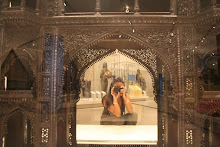
This is another shot of one of the coolest lounges in the world. It's called the Crimson Lounge in downtown Chicago. It has incredible textures and lights inside that are very hard to capture unless you use this HDR technique. At least, that's my story and I'm stickin' to it.
Eye HDR 2 by ~ridethespiral1 on deviantART
Oh there is a murderess amongst usHer love is a violent spiralHurling in upon us, conjured upAt the birth of the worldDurga is a dancerMindless questions find no answersSlicing through the etherYeah she's gleaming like mother of pearlDirty little whirlwindCommander, controllerI found youDirty little whirlwindI am pinned by the heat of your swirlDirty little whirlwindDefender, destroyer I found youDirty little whirlwindTangled up in the flesh of a girlOh you could curl up beside meThe spark in your eyes belies the apocalypse inside youTwisting the pits from the particleSkull can't save faceSo shake the shame from itBurn me up inside youLet me churn in your furnace of whirlDirty little whirlwindCommander, controllerI found youDirty little whirlwindI am pinned by the heat of your swirlDirty little whirlwindDefender, destroyer I found youDirty little whirlwindAll caught up in the flesh of a girlAll that I ever wanted to be was destroyed at seaHurricane rescued me salvaged calamityDo not delay we stood in place for itTurn me up inside youUp and into the heart of your world
TV on The Radio - Dirty Whirlwind - Live @ The Showbox 31,363 views

John Frusciante The Empyrean New Album Dark Light 2009 27,150 views

John Frusciante
New Album: The Empyrean on Record Collection 1.20.2009
My Uncle knows a member of Record Collection, thats why I get it.
PLEASE BUY THE CD/LP
The Empyrean is my new record and will be released worldwide via Record Collection on January 20th 2009. It was recorded on and off between December 2006 and March 2008. It is a concept record that tells a single story both musically and lyrically. The story takes place within one person, and there are two characters. It contains a version of Tim Buckleys, 'Song To The Siren' and the rest of the songs are written by me. My friend Josh plays on it, as does Flea. It also features Sonus Quartet, Johnny Marr and The New Dimension Singers. I'm really happy with it and I've listened to it a lot for the psychedelic experience it provides. It should be played as loud as possible and it is suited to dark living rooms late at night.
- John Frusciante, November 3rd, 2008
The Empyrean Track listing:
1. Before The Beginning2. Song To The Siren3. Unreachable4. God5. Dark/Light6. Heaven7. Enough Of Me8. Central9. One More Of Me10. After The Ending
JP BONUS TRACKS
11.Today12. Ah Yom

Now, if you really want to see the details, I will explain how to see the huge size. I sometimes expect people know how to do this, but many do not, so I am happy to explain. 1) Click on the photo, and that will go to the Flickr page. 2) Click on ALL SIZES+ above the photo. 3) Click on ORIGINAL. That will show the huge version... the only problem is it probably won't fit on your monitor! You can do that with all the photos I upload... I like putting the huge ones on there for people to enjoy, use as personal wallpaper on their computers, other non-commercial purposes, etc.
Taken on March 14, 2009 at 12.50am CDT
Posted to Flickr July 29, 2009 at 12.40am CDT
From the blog at www.stuckincustoms.com
Uploaded by Stuck in Customs on 29 Jul 09, 10.40PM PDT.
John Frusciante The Empyrean New Album God 2009 2,735 views
So each day would be new I build you to sleep
That's the idea of dying but you'll just have to see
You can do what you want or so you think
But til you stop all your thoughts
you are ties to your surroundings
When the fog spreads out in the rainy season
It comes from my insides
When the thunderous lightning strikes down
You're seeing your real I
People
You blaspheme my name
But still I love you
Still I love you
I love you just the same
I hear all your prayers because I'm each one of you
Creations not something I did
It's something that I do
The reason for the bad is so there'd be such thing as good
Oh I'd do anything for you
You all know I would
Be for me Be for me Be for me Before me Before me Before me
You know that I try to repair and repay
As life goes by a thousand times
It gets a little better
All is belief, All is belief, All is belief, All is belief
 LOREENA McKENNITT - Dante's Prayer 273,717 views

Loreena McKennitt - Dante's Prayer 37,488 views


The Divine Comedy (Italian: Divina Commedia), written by Dante Alighieri between 1308 and his death in 1321, is widely considered the central epic poem of Italian literature, and is seen as one of the greatest works of world literature.[1] The poem's imaginative and allegorical vision of the Christian afterlife is a culmination of the medieval world-view as it had developed in the Western Church. It helped establish the Tuscan dialect in which it is written as the Italian standard.[2] It is divided into three parts, the Inferno, Purgatorio, and Paradiso.
Originally the work was simply titled Commedia and was later christened Divina by Giovanni Boccaccio. The first published edition to add the word divine to the title was that of the Venetian Humanist Lodovico Dolce in 1555.[3]
Contents[hide] |
[edit] Structure and story

The Divine Comedy is composed of over 14,000 lines that are divided into three canticas (Ital. pl. cantiche) — Inferno (Hell), Purgatorio (Purgatory), and Paradiso (Paradise) — each consisting of 33 cantos (Ital. pl. canti). An initial canto serves as an introduction to the poem and is generally considered to be part of the first cantica, bringing the total number of cantos to 100. The number 3 is prominent in the work, represented here by the length of each cantica. The verse scheme used, terza rima, is hendecasyllabic (lines of eleven syllables), with the lines composing tercets according to the rhyme scheme aba, bcb, cdc, ded, ....
The poem is written in the first person, and tells of Dante's journey through the three realms of the dead, lasting from the night before Good Friday to the Wednesday after Easter in the spring of 1300. The Roman poet Virgil guides him through Hell and Purgatory; Beatrice, Dante's ideal woman, guides him through Heaven. Beatrice was a Florentine woman whom he had met in childhood and admired from afar in the mode of the then-fashionable courtly love tradition which is highlighted in Dante's earlier work La Vita Nuova.
In Northern Italy's political struggle between Guelphs and Ghibellines, Dante was part of the Guelphs, who in general favored the Papacy over the Holy Roman Emperor. Florence's Guelphs split into factions around 1300, the White Guelphs, and the Black Guelphs. Dante was among the White Guelphs who were exiled in 1302 by the Lord-Mayor Cante de' Gabrielli di Gubbio, after troops under Charles of Valois entered the city, at the request of Pope Boniface VIII, who supported the Black Guelphs. This exile, which lasted the rest of Dante's life, shows its influence in many parts of the Comedy, from prophecies of Dante's exile to Dante's views of politics to the eternal damnation of some of his opponents.
In Hell and Purgatory, Dante shares in the sin and the penitence respectively. The last word in each of the three parts of the Divine Comedy is stelle, "stars."
[edit] Inferno

The poem begins on the night before Good Friday in the year 1300, "halfway along our life's path" (Nel mezzo del cammin di nostra vita). Dante is thirty-five years old, half of the biblical life expectancy of 70 (Psalm 90:10), lost in a dark wood (perhaps, allegorically, contemplating suicide—as "wood" is figured in Canto XIII, and the mention of suicide is made in Canto I of Purgatorio with "This man has not yet seen his last evening; But, through his madness, was so close to it, That there was hardly time to turn about" implying that when Virgil came to him he was on the verge of suicide or morally passing the point of no return), assailed by beasts (a lion, a leopard, and a she-wolf) he cannot evade, and unable to find the "straight way" (diritta via) - also translatable as "right way" - to salvation (symbolized by the sun behind the mountain). Conscious that he is ruining himself and that he is falling into a "deep place" (basso loco) where the sun is silent ('l sol tace), Dante is at last rescued by Virgil, and the two of them begin their journey to the underworld. Each sin's punishment in Inferno is a contrapasso, a symbolic instance of poetic justice; for example, fortune-tellers have to walk with their heads on backwards, unable to see what is ahead, because that was what they had tried to do in life:
"they had their faces twisted toward their haunches
and found it necessary to walk backward,
because they could not see ahead of them.
…and since he wanted so to see ahead,
he looks behind and walks a backward path.[4]
Allegorically, the Inferno represents the Christian soul seeing sin for what it really is, and the three beasts represent three types of sin: the self-indulgent, the violent, and the malicious.[5] These three types of sin also provide the three main divisions of Dante's Hell: Upper Hell (the first 5 Circles) for the self-indulgent sins; Circles 6 and 7 for the violent sins; and Circles 8 and 9 for the malicious sins.
[edit] Purgatorio

Having survived the depths of Hell, Dante and Virgil ascend out of the undergloom, to the Mountain of Purgatory on the far side of the world (in Dante's time, it was believed that Hell existed underneath Jerusalem). The Mountain is on an island, the only land in the Southern Hemisphere, created by the displacement of rock which resulted when Satan's fall created Hell.[6] At the shores of Purgatory, Dante and Virgil are attracted by a musical performance by Casella, but are reprimanded by Cato, a pagan who has been placed by God as the general guardian of the approach to the mountain. The text gives no indication whether or not Cato's soul is destined for heaven: his symbolic significance has been much debated. (Cantos I and II).
Allegorically, the Purgatorio represents the Christian life. Christian souls arrive escorted by an angel, singing in exitu Israel de Aegypto. In his Letter to Cangrande, Dante explains that this reference to Israel leaving Egypt refers both to the redemption of Christ and to "the conversion of the soul from the sorrow and misery of sin to the state of grace."[7] Appropriately, therefore, it is Easter Sunday when Dante and Virgil arrive.
The Purgatorio is notable for demonstrating the medieval knowledge of a spherical Earth. During the poem, Dante discusses the different stars visible in the southern hemisphere, the altered position of the sun, and the various timezones of the Earth. At this stage it is, Dante says, sunset at Jerusalem, midnight on the River Ganges, and sunrise in Purgatory.
[edit] Paradiso

After an initial ascension (Canto I), Beatrice guides Dante through the nine celestial spheres of Heaven. These are concentric and spherical, similar to Aristotelian and Ptolemaic cosmology. Dante admits that the vision of heaven he receives is the one that his human eyes permit him to see. Thus, the vision of heaven found in the Cantos is Dante's own personal vision, ambiguous in its true construction. The addition of a moral dimension means that a soul that has reached Paradise stops at the level applicable to it. Souls are allotted to the point of heaven that fits with their human ability to love God. Thus, there is a heavenly hierarchy. All parts of heaven are accessible to the heavenly soul. That is to say all experience God but there is a hierarchy in the sense that some souls are more spiritually developed than others. This is not determined by time or learning as such but by their proximity to God (how much they allow themselves to experience Him above other things). It must be remembered in Dante's schema that all souls in Heaven are on some level always in contact with God.
While the structures of the Inferno and Purgatorio were based around different classifications of sin, the structure of the Paradiso is based on the four cardinal virtues and the three theological virtues.
[edit] Earliest manuscripts

According to the Società Dantesca Italiana, no original manuscript written by Dante has survived, though there are many manuscript copies from the fourteenth and fifteenth centuries (more than 825 are listed on their site[8]). The oldest belongs to the 1330s, almost a decade after Dante's death. The most precious ones are the three full copies made by Giovanni Boccaccio (1360s), who himself did not have the original manuscript as a source.
The first printed edition was published in Foligno, Italy, by Johann Numeister and Evangelista Angelini on 11 April 1472. Of the 300 copies printed, fourteen still survive. The original printing press is on display in the Oratorio della Nunziatella in Foligno.
[edit] Thematic concerns
The Divine Comedy can be described simply as an allegory: Each canto, and the episodes therein, can contain many alternative meanings. Dante's allegory, however, is more complex, and, in explaining how to read the poem (see the Letter to Cangrande[9]), he outlines other levels of meaning besides the allegory (the historical, the moral, the literal, and the anagogical).
The structure of the poem, likewise, is quite complex, with mathematical and numerological patterns arching throughout the work, particularly threes and nines, which are related to the Trinity. The poem is often lauded for its particularly human qualities: Dante's skillful delineation of the characters he encounters in Hell, Purgatory, and Paradise; his bitter denunciations of Florentine and Italian politics; and his powerful poetic imagination. Dante's use of real characters, according to Dorothy Sayers in her introduction to her translation of the Inferno, allows Dante the freedom of not having to involve the reader in description, and allows him to "[make] room in his poem for the discussion of a great many subjects of the utmost importance, thus widening its range and increasing its variety."
Dante called the poem "Comedy" (the adjective "Divine" added later in the 14th century) because poems in the ancient world were classified as High ("Tragedy") or Low ("Comedy"). Low poems had happy endings and were of everyday or vulgar subjects, while High poems were for more serious matters. Dante was one of the first in the Middle Ages to write of a serious subject, the Redemption of Man, in the low and vulgar Italian language and not the Latin language as one might expect for such a serious topic. Boccaccio's account that an early version of the poem was begun by Dante in Latin is still controversial.[10][11]
[edit] Dante's personal involvement
In his allegorical description of sin (in the Inferno) and virtue (in the Purgatorio and Paradiso), Dante draws on real characters from ancient Greek and Roman myths and history, and from his own times. However, his own actions often also illustrate the concepts he is discussing. For example, Dante shares the fleshly sins of the damned at several points in the upper circles of Hell. At the first circle where the virtuous pagans who pursued honor above all else are punished by eternally knowing they have fallen short for their lack of faith, Dante shares with them their love of honor, as evidenced by the word “honor” being used repeatedly in the Canto.[12] Similarly, at the third circle where Ciacco and other gluttons are punished for their appetites, Dante’s appetite for political information about his fellow Florentines appears equally gluttonous:
"And I to him: I wish thee still to teach me,
And make a gift to me of further speech.
Farinata and Tegghiaio, once so worthy,
Jacopo Rusticucci, Arrigo, and Mosca,
And others who on good deeds set their thoughts,
Say where they are, and cause that I may know them;
For great desire constraineth me to learn
If Heaven doth sweeten them, or Hell envenom."[13]
Conversely, in the Purgatorio, after leaving the terrace of the proud, Dante has learned from the example set by Omberto[14] and suppresses his own pride, declining to speak of his achievements:
"And I: Through midst of Tuscany there wanders
A streamlet that is born in Falterona,
And not a hundred miles of course suffice it;
From thereupon do I this body bring.
To tell you who I am were speech in vain,
Because my name as yet makes no great noise."[15]
[edit] Scientific themes
Although the Divine Comedy is primarily a religious poem, discussing sin, virtue, and theology, Dante also discusses several elements of the science of his day (this mixture of science with poetry has received both praise and blame over the centuries[16]). The Purgatorio repeatedly refers to the implications of a spherical Earth, such as the different stars visible in the southern hemisphere, the altered position of the sun, and the various timezones of the Earth. For example, at sunset in Purgatory it is midnight in Spain, dawn in Jerusalem, and noon on the River Ganges:[17]
Just as, there where its Maker shed His blood,
the sun shed its first rays, and Ebro lay
beneath high Libra, and the ninth hour's rays
were scorching Ganges' waves; so here, the sun
stood at the point of day's departure when
God's angel happy showed himself to us.[18]
Dante travels through the centre of the Earth in the Inferno, and comments on the resulting change in the direction of gravity in Canto XXXIV (lines 76–120). A little earlier (XXXIII, 102–105), he queries the existence of wind in the frozen inner circle of hell, since it has no temperature differentials.[19]
Inevitably, given its setting, the Paradiso discusses astronomy extensively, but of course in the Ptolemaic sense. The Paradiso also discusses the importance of the experimental method in science, with a detailed example in lines 94–105 of Canto II:
"Yet an experiment, were you to try it,
could free you from your cavil and the source
of your arts' course springs from experiment.
Taking three mirrors, place a pair of them
at equal distance from you; set the third
midway between those two, but farther back.
Then, turning toward them, at your back have placed
a light that kindles those three mirrors and
returns to you, reflected by them all.
Although the image in the farthest glass
will be of lesser size, there you will see
that it must match the brightness of the rest."[20]
A briefer example occurs in Canto XV of the Purgatorio (lines 16-21), where Dante points out that both theory and experiment confirm that the angle of incidence is equal to the angle of reflection. Other references to science in the Paradiso include descriptions of clockwork in Canto XXIV (lines 13–18), and Thales' theorem about triangles in Canto XIII (lines 101–102).
Galileo Galilei is known to have lectured on the Inferno, and it has been suggested that the poem may have influenced some of Galileo's own ideas regarding mechanics.[21]
[edit] The Divine Comedy and Islamic philosophy
In 1919 Professor Miguel Asín Palacios, a Spanish scholar and a Catholic priest, published La Escatología musulmana en la Divina Comedia ("Islamic Eschatology in the Divine Comedy"), an account of parallels between early Islamic philosophy and the Divine Comedy. Palacios argued that Dante derived many features of and episodes about the hereafter indirectly from the spiritual writings of Ibn Arabi and from the Isra and Mi'raj or night journey of Muhammad to heaven. The latter is described in the Hadith and the Kitab al Miraj (translated into Latin in 1264 or shortly before[22] as Liber Scalae Machometi, "The Book of Muhammad's Ladder"), and has some slight similarities to the Paradiso, such as a sevenfold division of Paradise,[23] although this is not unique to the Kitab al Miraj.
Dante lived in a Europe of substantial literary and philosophical contact with the Muslim world, encouraged by such factors as Averroism and the patronage of Alfonso X of Castile. Of the twelve wise men Dante meets in Canto X of the Paradiso, Thomas Aquinas and, even more so, Sigier of Brabant were strongly influenced by Arabic commentators on Aristotle.[24] Medieval Christian mysticism also shared the Neoplatonic influence of Sufis such as Ibn Arabi. Philosopher Frederick Copleston argued in 1950 that Dante's respectful treatment of Averroes, Avicenna, and Sigier of Brabant indicates his acknowledgement of a "considerable debt" to Islamic philosophy.[24]
Although this philosophical influence is generally acknowledged, many scholars have not been satisfied that Dante was influenced by the Kitab al Miraj. The twentieth century Orientalist Francesco Gabrieli expressed skepticism regarding the claimed similarities, and the lack of evidence of a vehicle through which it could have been transmitted to Dante. Even so, while dismissing the probability of some influences posited in Palacios' work,[25] Gabrieli recognized that it was "at least possible, if not probable, that Dante may have known the Liber scalae and have taken from it certain images and concepts of Muslim eschatology". Shortly before her death the Italian philologist Maria Corti pointed out that, during his stay at the court of Alfonso X, Dante's mentor Brunetto Latini met Bonaventura de Siena, a Tuscan who had translated the Kitab al Miraj from Arabic into Latin. According to Corti,[26] Brunetto may have provided a copy of that work to Dante. However, no evidence exists to support this speculation.
[edit] Literary influence in the English-speaking world and beyond
The work was not always so well regarded. After being recognized as a masterpiece in the first centuries following its publication,[27] the work was largely ignored during the Enlightenment, with some notable exceptions such as Vittorio Alfieri, Antoine de Rivarol, who translated the Inferno into French, and Giambattista Vico, who in the Scienza nuova and in the Giudizio su Dante inaugurated what would later become the romantic reappraisal of Dante, juxtaposing him to Homer.[28] The Comedy was "rediscovered" by William Blake - who illustrated several passages of the epic - and the romantic writers of the 19th century. Later authors such as T. S. Eliot, Ezra Pound, Samuel Beckett, C.S. Lewis and James Joyce have drawn on it for inspiration. The poet Henry Wadsworth Longfellow was its first American translator,[29] and modern poets, including Seamus Heaney,[30] Robert Pinsky, John Ciardi, and W. S. Merwin, have also produced translations of all or parts of the book. In Russia, beyond Pushkin's memorable translation of a few triplets[citation needed], Osip Mandelstam's late poetry has been said to bear of the mark of a "tormented meditation" on the Comedy.[31] In 1934 Mandelstam gave a modern reading of the poem in his labyrinthine "Conversation on Dante"[32]
New English translations of the Divine Comedy continue to be published regularly. Notable English translations of the complete poem include:
| Year | Translator | Notes |
| 1805–1814 | Henry Francis Cary | An older translation, widely available online |
| 1882 | Henry Wadsworth Longfellow | The first American translation, and still widely read, including online |
| 1933-1943 | Laurence Binyon | In an English version of terza rima |
| 1949–1962 | Dorothy L. Sayers | Translated for Penguin Classics, intended for a wider audience, and completed by Barbara Reynolds |
| 1954–1970 | John Ciardi | His Inferno was recorded and released by Folkways Records in 1954 |
| 1981 | C. H. Sisson | Available in Oxford World's Classics |
| 1982 | Allen Mandelbaum | Available online |
| 1967–2002 | Mark Musa | An alternative Penguin Classics version |
| 2000-2007 | Robert and Jean Hollander | Online as part of the Princeton Dante Project |
| 2006–2007 | Robin Kirkpatrick | A third Penguin Classics version, replacing Musa's |

The Divine Comedy has been a source of inspiration for countless artists for almost seven centuries. There are many references to Dante's work in literature. In music, Franz Liszt was one of many composers to write works based on the Divine Comedy. In sculpture, the work of Auguste Rodin is notable for themes from Dante, and many visual artists have illustrated Dante's work, as shown by the examples above. There have also been many references to the Divine Comedy in cinema and computer games.
~~~~~~~~~~~~~~~~~~~~~~~~~~~~~~~~~~~~~~~~~~~~~~~~~~~~~~~~~~~~new note 7.30.2009 12.55pm est
Eye HDR 2 by ~ridethespiral1 on deviantART
INXS - Devil inside fight it 57,839 views


Dead Prez "Hip Hop" 2,781,059 views

Sting -Desert rose live 283,751 views

June 26, 2008Sting live -Villa Italy Brasil-big brotherCategory: Entertainment Tags: Brazil live sting uk Uploaded Using

"Desert Rose"

I dream of rain
I dream of gardens in the desert sand
I wake in vain
I dream of love as time runs through my hand
I dream of fire
Those dreams are tied to a horse that will never tire
And in the flames
Her shadows play in the shape of a man's desire
This desert rose
Each of her veils, a secret promise
This desert flower
No sweet perfume ever tortured me more than this
And as she turns
This way she moves in the logic of all my dreams
This fire burns
I realize that nothing's as it seems

I dream of rain
I dream of gardens in the desert sand
I wake in vain
I dream of love as time runs through my hand
I dream of rain
I lift my gaze to empty skies above
I close my eyes
This rare perfume is the sweet intoxication of her love
I dream of rain
I dream of gardens in the desert sand
I wake in vain
I dream of love as time runs through my hand
Sweet desert rose
Each of her veils, a secret promise
This desert flower
No sweet perfume ever tortured me more than this
Sweet desert rose
This memory of Eden haunts us all
This desert flower
This rare perfume, is the sweet intoxication of the fall